
Exploring the world of indoor plants for beautiful interior design, this introduction sets the stage for a journey into the lush and vibrant realm of greenery. From enhancing aesthetics to promoting a healthier living environment, indoor plants offer a myriad of benefits that can transform any space into a botanical paradise.
As we delve deeper into the nuances of selecting, caring for, and styling indoor plants, you'll discover how these natural elements can elevate the ambiance of your home with elegance and grace.
Benefits of Indoor Plants
Indoor plants are not only decorative elements but also offer numerous benefits for interior design and overall well-being.
Enhance Aesthetics
Indoor plants add a touch of nature to indoor spaces, creating a serene and inviting atmosphere. They can complement various interior design styles, from modern to bohemian, adding a pop of color and texture to any room.
Improves Air Quality
Indoor plants help purify the air by absorbing toxins and releasing oxygen, creating a healthier indoor environment. They can reduce indoor pollution levels and increase humidity, which can be particularly beneficial in dry climates.
Promotes Relaxation
The presence of indoor plants has been linked to reduced stress levels and improved mental well-being. Their calming effect can help create a more relaxing and peaceful ambiance, perfect for unwinding after a long day.
Boosts Productivity
Studies have shown that indoor plants in workspaces can increase productivity, creativity, and concentration. The greenery can help reduce fatigue and boost mood, leading to a more positive and productive work environment.
Supports Biophilic Design
Incorporating indoor plants into interior design aligns with the principles of biophilic design, which emphasizes the connection between humans and nature. This design approach seeks to create spaces that foster well-being and connection to the natural world.
Types of Indoor Plants
Indoor plants come in various types, each offering unique characteristics that can enhance the interior design of a space. From lush greenery to colorful blooms, there are plenty of options to choose from when selecting indoor plants for your home or office.
Succulents
Succulents are popular indoor plants known for their low maintenance and striking appearance. These plants come in a wide range of shapes, sizes, and colors, making them versatile additions to any indoor space. Succulents thrive in bright light and require minimal watering, making them perfect for busy individuals or those new to plant care.
Snake Plant
The snake plant, also known as mother-in-law's tongue, is a hardy indoor plant that can withstand low light conditions and infrequent watering. Its tall, upright leaves add a sculptural element to any room, making it a popular choice for modern interior design.
The snake plant is also known for its air-purifying properties, making it both beautiful and beneficial for indoor environments.
Pothos
Pothos plants are another low maintenance option for indoor spaces. These trailing plants feature heart-shaped leaves and come in various shades of green, making them a versatile choice for adding a pop of color to any room. Pothos plants are easy to care for and can thrive in a variety of lighting conditions, making them ideal for beginners or those with limited natural light in their space.
Placement and Arrangement
Indoor plants not only add a touch of nature to your home but also play a crucial role in enhancing the overall aesthetics of your living space. Proper placement and arrangement of indoor plants can significantly impact the visual appeal of your interior design.When strategically placing indoor plants, consider the following tips:
Utilize Empty Corners and Nooks
- Empty corners and nooks are perfect spots for tall plants like fiddle leaf figs or snake plants to add vertical interest to the room.
- Consider placing a large plant in an empty corner to create a focal point and fill up the space.
- Balance the visual weight by placing smaller plants on shelves or tables nearby.
Group Plants Together
- Grouping plants together can create a lush and cohesive look, especially when using plants of varying heights and textures.
- Cluster a mix of plant types on a plant stand or in a corner to create a mini indoor garden.
- Consider placing plants with similar care requirements together for easier maintenance.
Incorporate Plants in Different Rooms
- Add a touch of greenery to the living room with hanging plants or a statement plant near the window.
- Place small succulents or air plants in the bathroom for a spa-like atmosphere.
- Bring life to the bedroom with a potted plant on the nightstand or a trailing plant on a shelf.
Care and Maintenance
Indoor plants require regular care and maintenance to thrive and enhance the beauty of your interior space. By following a few essential routines, you can ensure that your indoor plants stay healthy and vibrant.
Watering Schedule
Proper watering is crucial for the health of indoor plants. Overwatering can lead to root rot, while underwatering can cause wilting and stunted growth. Here are some tips for creating a watering schedule:
- Check the moisture level of the soil before watering. Stick your finger into the soil; if it feels dry, it's time to water.
- Water thoroughly until it drains out of the bottom of the pot, ensuring that the roots receive enough moisture.
- Avoid letting the plant sit in water, as this can lead to root rot. Make sure pots have proper drainage.
- Adjust the watering frequency based on the plant type, season, and environmental conditions.
Light Requirements
Light is essential for photosynthesis and the overall health of indoor plants. Different plants have varying light requirements, so it's crucial to provide adequate light for optimal growth. Here are some tips for ensuring proper light exposure:
- Place plants near windows with bright, indirect sunlight. Rotate them regularly to ensure even light distribution.
- Monitor for signs of light deficiency, such as yellowing leaves or leggy growth, and adjust the plant's placement accordingly.
- Consider supplementing natural light with grow lights for plants that require more intense light conditions.
Pruning Techniques
Pruning helps maintain the shape, health, and growth of indoor plants. By removing dead or damaged foliage, you can promote new growth and prevent diseases. Here are some pruning techniques to keep your plants in top condition:
- Use clean, sharp scissors or pruning shears to make precise cuts without damaging the plant.
- Remove dead or yellowing leaves to improve the plant's appearance and overall health.
- Prune overgrown branches or stems to encourage bushier growth and prevent leggy appearance.
- Regularly inspect plants for pests and diseases while pruning to maintain a healthy environment.
Common Issues and Troubleshooting
Despite your best efforts, indoor plants may face common issues such as pests, diseases, or environmental stress. Here are some troubleshooting tips to address these problems:
- Inspect plants regularly for signs of pests like spider mites, aphids, or whiteflies. Treat infestations promptly with insecticidal soap or neem oil.
- Monitor for symptoms of common plant diseases such as powdery mildew, root rot, or leaf spot. Adjust watering habits and improve air circulation to prevent disease spread.
- Ensure plants are not exposed to drafts, extreme temperatures, or sudden changes in humidity, as these factors can stress the plants. Maintain a consistent environment for optimal growth.
Indoor Plant Décor Ideas
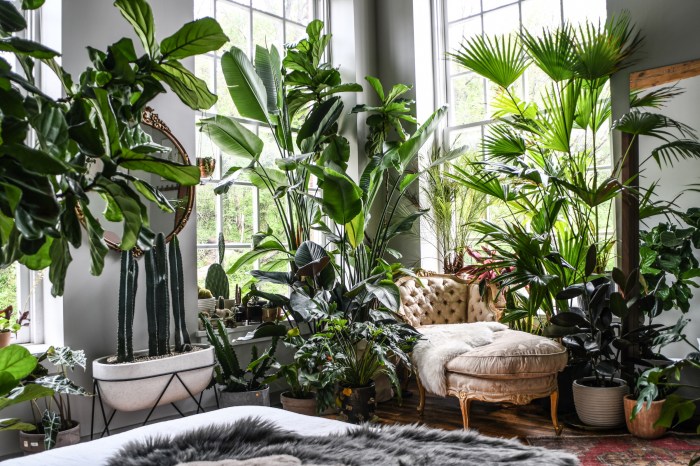
Indoor plants can be a great way to add a touch of nature and freshness to your home, while also enhancing the overall aesthetic appeal. Here are some creative ideas on how to incorporate indoor plants into your interior design:
Modern Style
- Choose sleek and minimalist planters to complement the clean lines and neutral color palette of modern decor.
- Opt for statement plants like fiddle leaf figs or rubber plants to create a focal point in the room.
- Cluster smaller plants together on a modern shelving unit for a cohesive look.
Bohemian Style
- Mix and match different types of plants in colorful and eclectic planters for a bohemian vibe.
- Hang trailing plants like pothos or string of pearls in macramé plant hangers to add a boho touch to your space.
- Create a cozy corner with floor cushions and a variety of lush, tropical plants for a bohemian oasis.
Minimalist Style
- Stick to a few select plant varieties in simple, white or neutral-colored pots to maintain a minimalist aesthetic.
- Place a single statement plant, such as a monstera or peace lily, in a clean, uncluttered space for maximum impact.
- Incorporate small succulents or cacti on a windowsill or floating shelves for a subtle touch of greenery.
Concluding Remarks
In conclusion, Best Indoor Plants for Beautiful Interior Design opens up endless possibilities for infusing your living space with nature's beauty. By incorporating the right plants, nurturing them with care, and integrating them seamlessly into your decor, you can create a harmonious and visually stunning environment that breathes new life into your home.
Commonly Asked Questions
What are the benefits of having indoor plants?
Indoor plants not only enhance the aesthetics of your space but also purify the air, reduce stress levels, and boost mood and productivity.
How do I care for indoor plants to keep them healthy?
Ensure your indoor plants receive adequate sunlight, water them according to their specific needs, and regularly dust their leaves to keep them thriving.
Can indoor plants be placed in rooms with low light?
Yes, there are several indoor plants such as snake plants and pothos that can thrive in low-light conditions, making them perfect for rooms with minimal natural light.
What are some creative ways to incorporate indoor plants into my decor?
You can display indoor plants in hanging planters, terrariums, macrame hangers, or even create a lush green corner using a variety of plant species to add a touch of nature to your home.