
Embark on a journey of creativity and design with our guide on How to Create a Personalized Interior Mood Board. This insightful piece delves into the intricacies of crafting a mood board that reflects your unique style and vision, setting the stage for a visually stunning interior space.
Delve deeper into the world of interior design as we explore the key elements and techniques needed to bring your mood board to life.
Understand the Concept of Mood Boards
In interior design, a mood board is a visual representation of a design concept or idea. It typically includes a collage of images, textures, colors, and materials that convey the overall look and feel of a space.
Define the Purpose of Creating a Personalized Interior Mood Board
Creating a personalized interior mood board serves as a creative tool to help you visualize and conceptualize your design ideas before implementing them in a space. It allows you to experiment with different combinations of elements to achieve a cohesive and harmonious design aesthetic.
Examples of How Mood Boards Can Influence Design Decisions
- By compiling images of furniture, decor, and color schemes on a mood board, you can better understand how these elements work together and make informed decisions about your design direction.
- A mood board can inspire creativity and help you explore different design styles and themes, ultimately leading to a more personalized and unique interior design.
- When presenting your mood board to clients or collaborators, it can effectively communicate your vision and ensure everyone is on the same page regarding the design concept.
Gathering Inspiration
When creating a personalized interior mood board, gathering inspiration is a crucial step to help you visualize the overall look and feel of your space. By exploring different sources and collecting a variety of images, colors, textures, and patterns, you can curate a cohesive collection of inspiration for your mood board.
Exploring Different Sources
- Interior design magazines and books: Flip through the pages of design magazines or browse through interior design books to discover the latest trends and styles.
- Online platforms: Explore websites like Pinterest, Instagram, and design blogs to find a wide range of interior design inspiration at your fingertips.
- Nature and surroundings: Draw inspiration from the colors, textures, and patterns found in nature and your surroundings. Take note of elements that resonate with you.
Collecting Images, Colors, Textures, and Patterns
- Save images: Save images that catch your eye and evoke the mood you want to create in your space. Organize them in a digital folder or create a physical mood board.
- Color palette: Identify key colors that you are drawn to and that complement each other. Consider creating a color palette to guide your design choices.
- Textures and patterns: Look for textures and patterns that add depth and visual interest to your mood board. Mix and match different textures to create a dynamic look.
Tips for Curating a Cohesive Collection
- Focus on a theme: Choose a central theme or concept to guide your inspiration gathering process. This will help ensure that your mood board has a cohesive and harmonious feel.
- Edit ruthlessly: Select only the images, colors, textures, and patterns that truly resonate with you and align with your vision for the space. Editing will help you create a more focused and impactful mood board.
- Experiment and play: Don't be afraid to experiment with different combinations and arrangements of elements on your mood board. Play around with layouts until you find a composition that speaks to you.
Choosing a Theme or Style
Selecting a theme or style for your interior mood board is crucial as it sets the tone for the entire design concept. It helps create a cohesive look and feel for your space, guiding your choices in colors, patterns, and furniture selections.
Importance of Selecting a Theme or Style
Choosing a theme or style provides a framework for your design decisions, ensuring that everything in the room complements each other. It helps create a harmonious and visually appealing space that reflects your personality and taste.
- It helps you stay focused and avoid feeling overwhelmed by the myriad of choices available.
- Having a specific theme or style makes it easier to communicate your vision to others, such as interior designers or contractors.
- It sets the mood and ambiance of the room, whether you want a cozy, rustic feel or a sleek, modern look.
Narrowing Down Options and Deciding on a Specific Theme
To narrow down your options and decide on a specific theme, start by considering your personal preferences, lifestyle, and the function of the space. Look for inspiration in magazines, online platforms, or even nature. Create a mood board with images, colors, textures, and patterns that resonate with you.
- Identify common elements in the images you've collected to help define a cohesive theme.
- Consider the existing architecture and features of the space to ensure your chosen theme complements the surroundings.
- Experiment with different styles and themes before settling on the one that truly speaks to you.
Popular Interior Design Styles to Consider
There are various interior design styles to choose from, each with its unique characteristics and aesthetic appeal. Some popular styles to consider for your mood board include:
- Modern: Clean lines, minimalistic approach, and a focus on functionality.
- Scandinavian: Light, airy spaces, natural materials, and a cozy, hygge feel.
- Industrial: Raw, unfinished elements, exposed brick, and metal accents for a warehouse-inspired look.
- Bohemian: Eclectic mix of patterns, textures, and colors for a free-spirited and artistic vibe.
- Mid-Century Modern: Retro-inspired design with a blend of vintage and contemporary elements.
Layout and Composition
When creating a personalized interior mood board, the layout and composition play a crucial role in conveying the desired mood and style effectively. The arrangement of elements, color schemes, balance, and hierarchy all contribute to the overall visual impact of the mood board.
Arranging Elements for Visual Impact
To create a visually striking mood board, consider arranging elements in a way that is visually appealing and cohesive. Start by placing larger items or central pieces in the center of the board to act as focal points. Surround these with smaller elements to create a balanced composition.
Experiment with different arrangements until you find one that visually resonates with the mood and style you are aiming for.
Color Schemes, Balance, and Hierarchy
Color schemes play a significant role in setting the mood of the interior design. Choose a color palette that reflects the desired ambiance, whether it's calming and neutral or bold and vibrant. Ensure that there is a balance in the distribution of colors throughout the mood board to avoid overwhelming or underwhelming visual effects.
Additionally, establish a hierarchy by using contrasting sizes, shapes, or colors to guide the viewer's eye through the composition.
Tips for Creating a Visually Appealing Layout
- Use a mix of textures, patterns, and materials to add depth and interest to the mood board.
- Play with different shapes and sizes to create visual contrast and flow.
- Incorporate whitespace to allow elements to breathe and prevent overcrowding.
- Consider the overall mood and style you want to convey and choose elements that align with that vision.
- Step back and assess the composition from a distance to ensure it looks cohesive and balanced.
Adding Texture and Materials
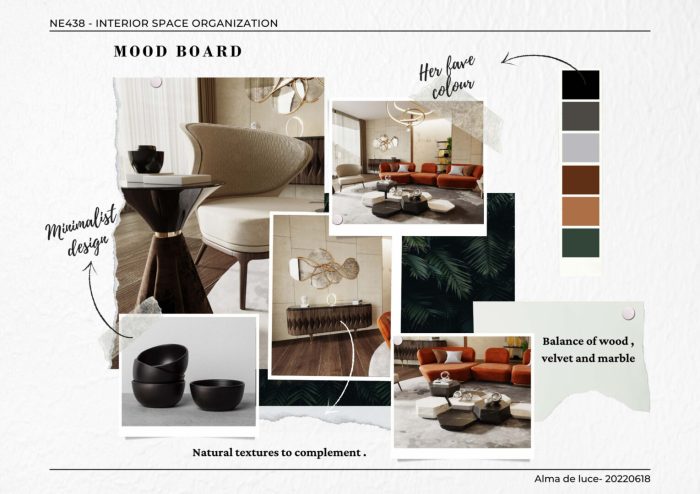
Adding texture and materials to your interior design mood board is essential for conveying the look and feel of the space you are envisioning. Texture adds depth and dimension, while materials bring a sense of luxury and functionality.
Incorporating Textures and Materials
When creating your mood board, consider adding swatches of different textures such as rough wood, soft fabrics, shiny metals, or smooth glass. These textures can be represented through actual samples or images that evoke the tactile experience you want to achieve in your design.
- Wood: Incorporating a piece of wood veneer or a photo of a wooden floor can add warmth and natural elements to your mood board.
- Fabric: Including swatches of different fabrics like velvet, linen, or silk can showcase the softness and comfort of the materials you plan to use in your interior design.
- Metal: Adding metallic finishes like copper, brass, or stainless steel can bring a touch of glamour and sophistication to your mood board.
- Glass: Including images of glass accessories or fixtures can introduce a sleek and modern feel to your design concept.
Digital Tools and Platforms
When it comes to creating personalized interior mood boards, digital tools and platforms offer a convenient and efficient way to bring your vision to life. These tools not only streamline the process but also provide a variety of features to enhance your design.
Digital Tools for Creating Mood Boards
- Canva: A versatile graphic design platform that offers templates, graphics, and tools to create visually appealing mood boards.
- Adobe Creative Cloud: Adobe Photoshop and Illustrator are popular choices for creating detailed and professional mood boards with customizable options.
- Morpholio Board: Specifically designed for interior design, this app allows you to create digital mood boards with a library of furniture and decor items.
Comparison of Digital Platforms
There are various platforms available for creating digital mood boards, each offering unique features and benefits. Here is a comparison of some popular platforms:
| Platform | Features | Benefits |
|---|---|---|
| Canva | Templates, graphics, easy to use | Beginner-friendly, customization options |
| Adobe Creative Cloud | Professional tools, advanced editing | Detailed customization, high-quality output |
| Morpholio Board | Interior design-specific tools, furniture library | Specialized features for interior designers, collaboration options |
Benefits of Using Digital Tools
- Efficiency: Digital tools streamline the process of creating mood boards, saving time and effort.
- Customization: With digital platforms, you can easily customize colors, textures, and layouts to suit your design vision.
- Collaboration: Many digital tools allow for easy sharing and collaboration, making it simple to gather feedback and work with clients or team members.
- Accessibility: Digital platforms can be accessed from anywhere with an internet connection, providing flexibility in design workflow.
Final Conclusion
Elevate your interior design projects with the art of mood boarding, a powerful tool that captures inspiration and translates it into tangible design concepts. As you embark on your creative journey, remember that your personalized mood board is the blueprint for transforming your space into a reflection of your personality and style.
FAQs
How do I start creating a mood board?
To begin, gather inspiration from various sources such as magazines, online platforms, and nature. Collect images, colors, and textures that resonate with your design vision.
Why is it important to choose a theme for the mood board?
Selecting a theme helps create a cohesive design concept and guides your choices for colors, textures, and materials. It ensures that your mood board communicates a clear and consistent message.
What digital tools can I use to create a personalized interior mood board?
You can explore software like Canva, Adobe Spark, or Milanote for creating digital mood boards. These platforms offer a range of features to enhance your design process.