
Exploring the crucial connection between interior design and mental wellness, this article delves into the impact of our surroundings on our state of mind. From color psychology to clutter management, discover how small design choices can make a big difference in promoting a healthy mind.
Importance of Interior Design for Mental Wellness
Interior design plays a crucial role in promoting mental well-being by creating spaces that support emotional health and overall happiness. The design elements within our living environments can have a significant impact on our mood, stress levels, and overall mental state.
Color Psychology
- Color choices can greatly influence our emotions and cognitive function. For example, warm tones like red and orange can evoke feelings of energy and positivity, while cool tones like blue and green promote relaxation and calmness.
- By strategically incorporating different colors into interior design, a harmonious balance can be achieved to positively impact mental health.
Natural Light and Ventilation
- Access to natural light and proper ventilation are essential for creating a healthy living environment. Natural light has been linked to improved mood, increased productivity, and better sleep quality.
- Integrating large windows, skylights, or open spaces in interior design can help maximize natural light exposure and enhance mental well-being.
Clutter-Free Spaces
- A cluttered and disorganized living space can contribute to feelings of stress, anxiety, and overwhelm. Maintaining a clutter-free environment promotes mental clarity and a sense of calmness.
- Implementing storage solutions, organization systems, and minimalist design principles can help create a tranquil and harmonious living space that supports mental wellness.
Color Psychology in Interior Design
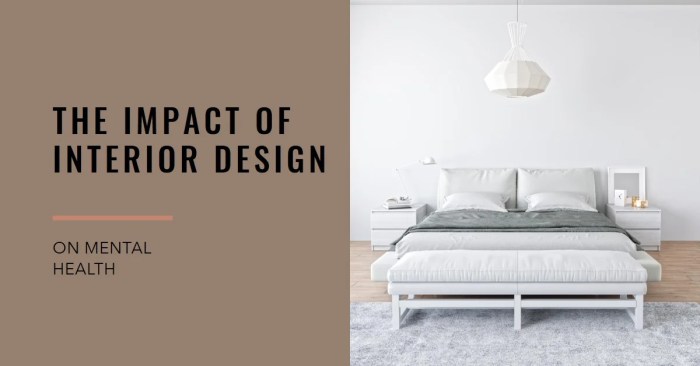
Color psychology plays a significant role in how different colors can affect mood and mental health. The selection of colors in interior design can have a profound impact on our overall well-being.
Effects of Different Colors
- Blue:Known for its calming and soothing effects, blue is often used in bedrooms and living rooms to promote relaxation and reduce stress.
- Green:Associated with nature, green can create a sense of balance and harmony, making it ideal for spaces where you want to feel refreshed and rejuvenated.
- Yellow:A cheerful and uplifting color, yellow can boost mood and energy levels, making it suitable for areas where you want to promote happiness and positivity.
- Gray:Often considered a neutral color, gray can evoke feelings of stability and composure, creating a sense of calmness and sophistication.
Importance of Mindful Color Selection
Choosing colors mindfully in interior design is crucial for promoting mental wellness. By understanding the impact of different colors on mood and emotions, designers can create spaces that support mental health and overall well-being. It is essential to consider the purpose of each room and the desired atmosphere when selecting color schemes to ensure a harmonious and conducive environment for relaxation and stress reduction.
Lighting and Its Impact on Mental Health

Lighting plays a crucial role in influencing our mood and overall mental well-being
The Role of Lighting in Mental Wellness
Proper lighting can help reduce feelings of stress, anxiety, and depression, while also improving focus, productivity, and overall happiness. Natural light, in particular, has been shown to have a positive effect on mental health, promoting feelings of calmness and well-being.
- Maximizing Natural Light: Position furniture and work areas near windows to maximize exposure to natural light. Consider using light-filtering curtains or blinds to control glare and optimize the amount of sunlight entering the space.
- Utilizing Artificial Lighting: In spaces where natural light is limited, incorporate artificial lighting sources such as overhead lights, floor lamps, or task lighting to brighten the area. Choose bulbs with a color temperature that mimics natural daylight to promote a sense of alertness and well-being.
- Creating Balance: Balance natural and artificial light sources to create a comfortable and soothing environment. Avoid harsh lighting that can cause eye strain and opt for softer, diffused lighting to create a warm and inviting atmosphere.
Organization and Clutter Management
Creating an organized and clutter-free living space is crucial for promoting mental wellness. Clutter can have a significant impact on our mental health and overall well-being.
How Clutter Affects Mental Health
Clutter in our environment can lead to feelings of stress, anxiety, and overwhelm. It can make it challenging to focus, relax, and unwind, affecting our mood and productivity. Research has shown that a cluttered space can increase cortisol levels, the stress hormone, and contribute to a sense of chaos and disorganization in our minds.
Organizing Tips for a Calming Space
- Start by decluttering regularly and getting rid of items you no longer need or use.
- Assign a home for everything you own to avoid random piles of belongings.
- Invest in storage solutions like bins, baskets, and shelves to keep items organized and out of sight.
- Create designated zones for different activities to maintain order and structure in your space.
Psychological Benefits of a Well-Organized Environment
A well-organized and tidy living environment can have a positive impact on our mental health. It can promote a sense of calm, clarity, and control, reducing feelings of stress and anxiety. A clutter-free space can also enhance productivity, creativity, and overall well-being, allowing for better focus and relaxation.
Last Word
In conclusion, prioritizing interior design for mental wellness is not just about aesthetics but also about creating a nurturing environment that supports your mental health. By paying attention to details like lighting, colors, and organization, you can transform your living space into a sanctuary for your well-being.
Frequently Asked Questions
How does interior design impact mental wellness?
Interior design can influence mood, stress levels, and overall mental well-being by creating a space that is comfortable, harmonious, and clutter-free.
What are some color schemes that promote relaxation?
Soft blues, calming greens, and neutral earth tones are known to promote relaxation and reduce stress in interior design.
Why is lighting important for mental health?
Lighting plays a significant role in influencing mood and well-being, affecting our sleep patterns, energy levels, and overall mental state.
How does clutter affect mental health?
Clutter can contribute to feelings of anxiety, overwhelm, and lack of focus, impacting mental well-being negatively.
What are the benefits of a well-organized living environment?
A well-organized space promotes a sense of calm, reduces stress, and enhances productivity, contributing to better mental health.